
Birth of the Hero · How the game works
Gameplay Guide
Explore a map. Bring its rewards into your castle, army and hero. Carry that progress into the next part of Failon's story.
Age of Failon: Birth of the Hero is a persistent turn-based strategy/RPG campaign. You follow Failon through story maps, developing the same hero, castle and army across the journey. This guide explains how those systems connect; the in-game tutorials cover the individual controls.
- Story chapters
- 30
- Campaign maps
- ≈358
- Castle eras
- 4
- Hero level cap
- 250
Campaign figures describe the full campaign, rather than the demo's scope.
Select any gameplay screenshot below to view it at full size.
01 / The journey
Campaign & persistent progression
The story spans 30 chapters and approximately 358 campaign maps. You complete maps in sequence: finishing one unlocks the next, and completing a region opens the next region and its first map. Completed maps cannot be replayed.
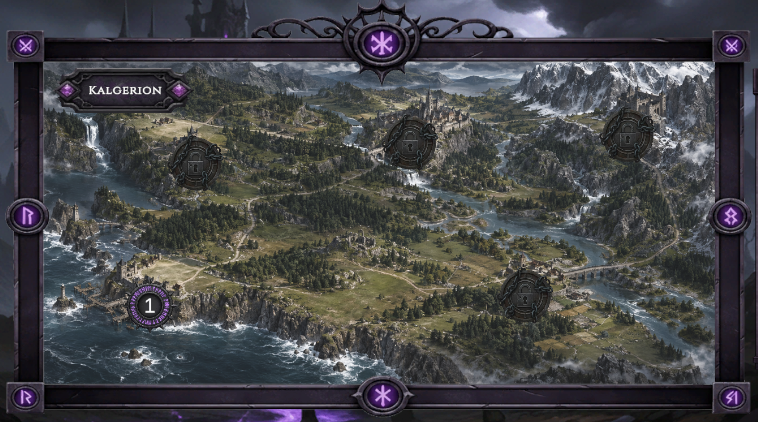
- Explore & complete objectivesCollect resources and defeat enemies on the current map.
- Develop your forcesUse rewards to improve your castle, recruit units and develop Failon.
- Continue the storyEnter the next map with the progress you have built.
Before completing the objectives
Losing any battle sends you back to the lobby, and you must restart the current map.
After completing the objectives
Use Leave Map immediately, or stay to collect remaining resources and fight remaining enemies. A defeat during this extra exploration does not undo the map's completion.
02 / Exploration
Playing a world map
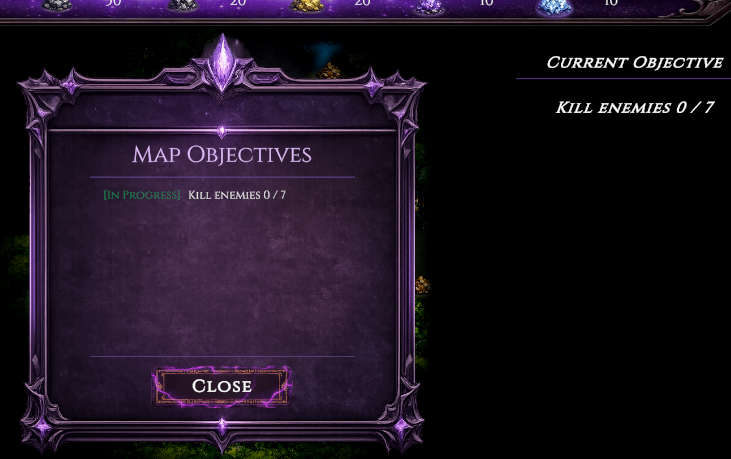
Each map gives you an objective, such as defeating a specified number of enemies. Completing it reveals the next objective; fulfilling all objectives completes the map.
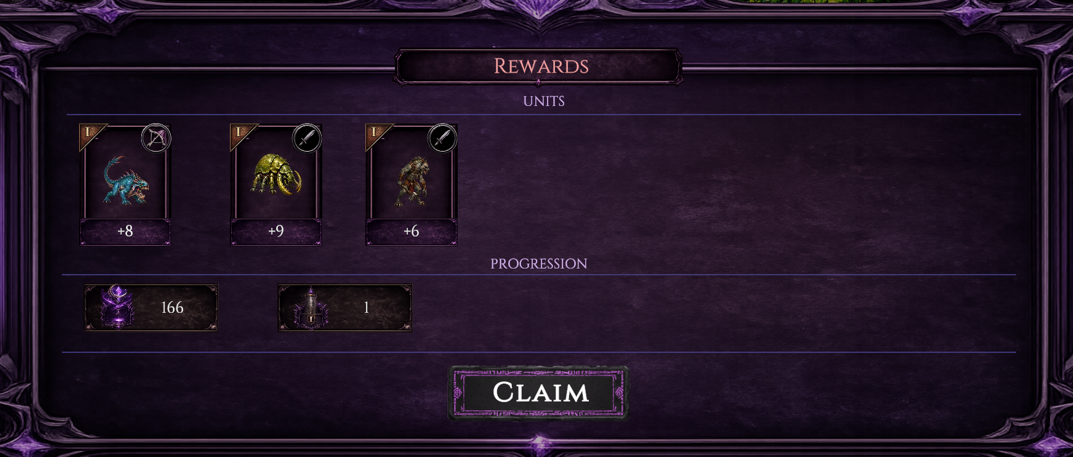
Between objectives, you move Failon along the map's routes, collect resources and encounter enemies and guarded objects. Defeating a building's defending army always grants a reward. Rewards can include unit cards for recruitment, Building Points, Hero Points, Skill Points and Spell Points. The reward window shows what you earned.
20 movement steps per day
Failon has 20 steps each day. When they run out, end the day to continue. Enemy heroes take their turns at this transition when an enemy-hero encounter is active, and can move to attack Failon.
Nearby enemies trigger combat
Moving onto a tile next to an enemy triggers an encounter, as does an enemy hero moving next to Failon. Ordinary enemies may show an army preview first, but the encounter is already committed. Building defenders and enemy heroes start battles directly.
Map rewards feed the other systems: resources pay for development, unit cards open recruitment, and progression points improve your castle and hero.
03 / Development
Castle & economy
Choose from six realms, each with its own buildings and units:
- Kingdom
- Wildlands
- Nature
- Underworld
- Void
- Heavens
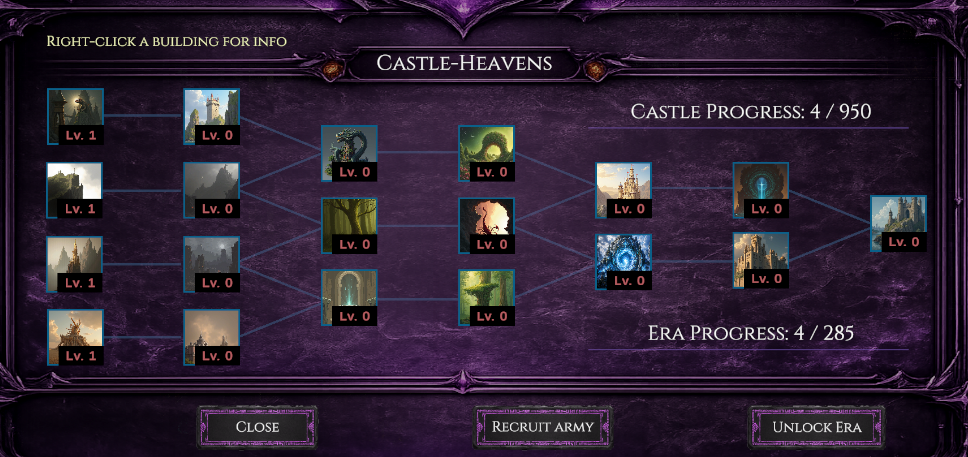
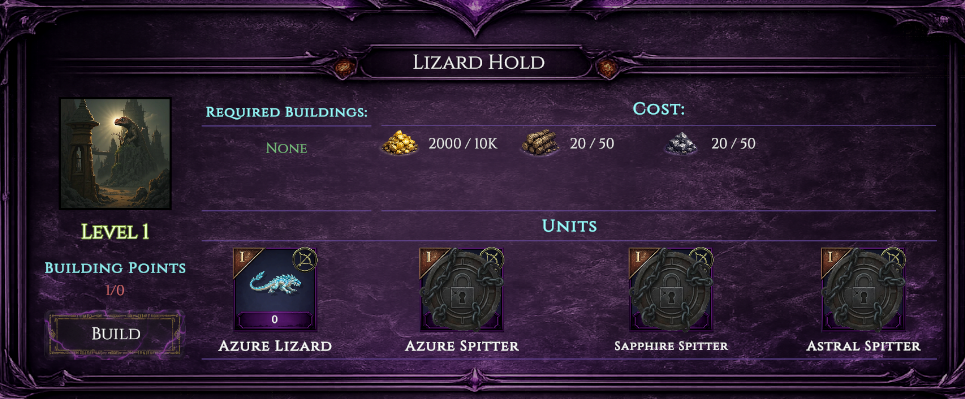
Each castle has 19 buildings arranged in a branching dependency tree. The first four buildings need no earlier building; later ones require their predecessor along the branch. Construction brings a building from level 0 to level 1. Further upgrades can eventually take it to level 50, subject to your current era's limit.
- Gold
- The primary resource, used alongside other resources for castle development and recruitment. Spell upgrades also cost Gold.
- Wood & Stone
- Secondary resources used in the economy. Each building or recruitment option shows its required resources.
- Silver, Sulfur, Crystal & Diamond
- Rare resources needed for development and recruitment according to the displayed costs.
- Building Points (BP)
- Every construction and building upgrade requires BP as well as resources. Earn these points by defeating building defenders on maps.
- Era Crystals
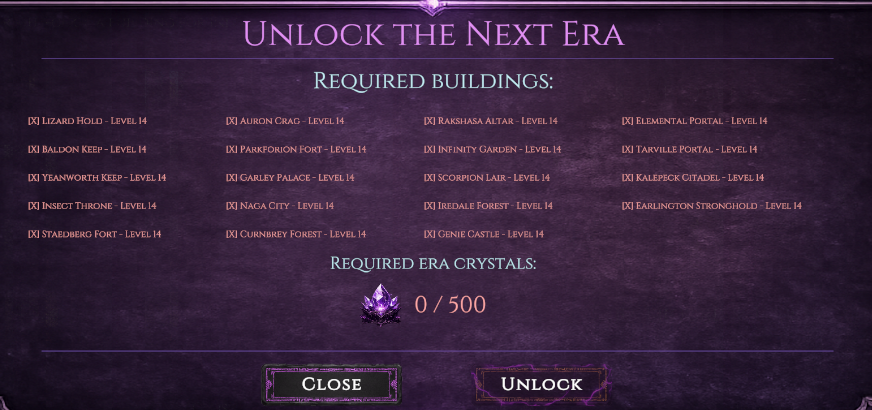
- A separate resource used to advance your castle to the next era. These are earned from building defenders, like Building Points.
Castle development and exploration work together: maps supply the resources, points and unit cards; the castle turns them into recruitment options and stronger unit evolutions.
04 / Long-term growth
Four eras & unit evolution
You begin in Era 1. Each era sets a maximum building level. To advance, bring all 19 buildings to the required level and spend the required Era Crystals. You can then upgrade buildings toward the next limit.
| Advancement | Every building must reach | Then upgrade a building to unlock |
|---|---|---|
| Era 1 → 2 | Level 14 + Era Crystals | Level 15 → Evolution 2 |
| Era 2 → 3 | Level 29 + Era Crystals | Level 30 → Evolution 3 |
| Era 3 → 4 | Level 44 + Era Crystals | Level 45 → Evolution 4 |
In Era 4, buildings can reach level 50. Each of the 19 unit lines has four evolutions, giving a realm 76 unit forms across its progression.
05 / Preparing your forces
Army & recruitment
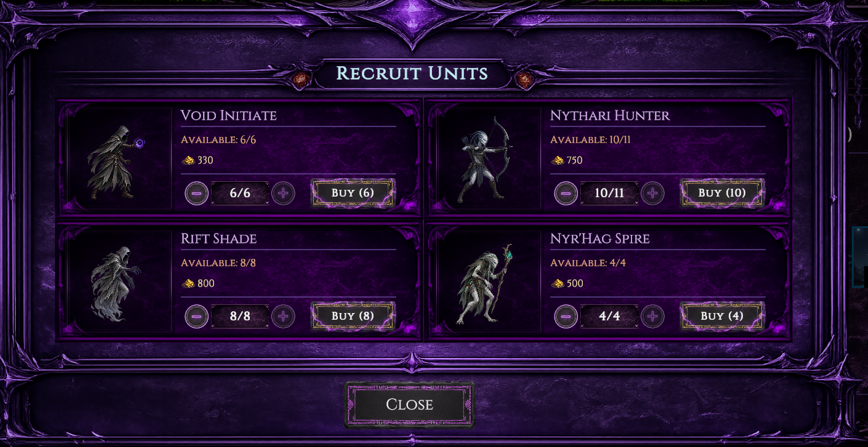
Before you can recruit a unit, you must obtain its unit card as a map reward. With the relevant castle building, unlock and resources available, recruit through that building or the castle's shared recruitment window.
- Find a unit cardMap rewards make units available for recruitment.
- Recruit in the castleSpend the required resources. New recruits enter Army Storage.
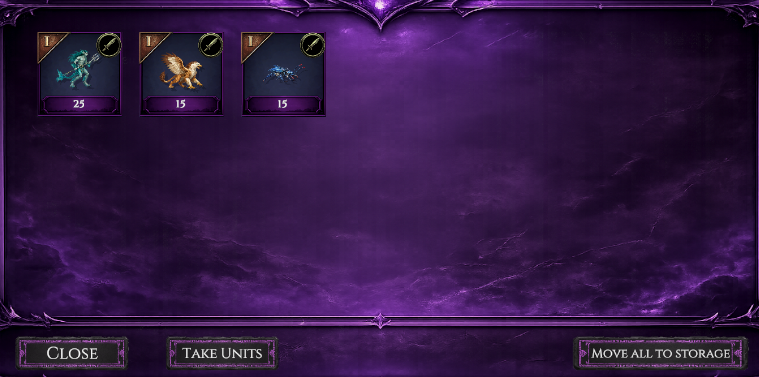
- Choose your formationMove stacks from storage into the army you take into battle.
Your active army holds up to 7 unit stacks. You can drag units between Army Storage and formation slots, and rearrange the formation. At least one unit must always remain in the active army.

Building levels determine when the next evolution of a unit line becomes available. Cards, castle development and recruitment costs all contribute to which units you can field.
06 / Failon
Hero progression
Failon can reach level 250. Maps also reward Hero Points, which you spend on attributes: one Hero Point raises an attribute by one.
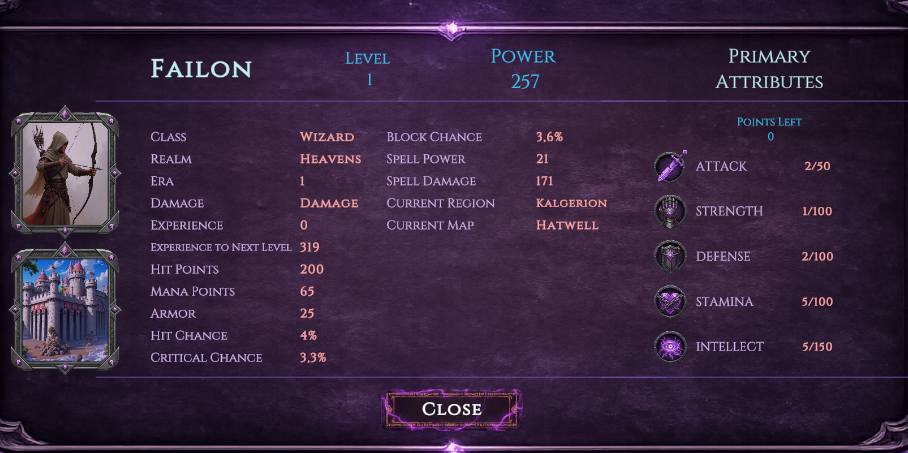
- Attack Cap 50
- Improves hit chance.
- Strength Cap 100
- Increases damage and the chance of a critical hit.
- Defence Cap 100
- Improves armour and block chance, helping reduce incoming damage.
- Stamina Cap 100
- Increases hit points and contributes to your army's health.
- Intellect Cap 150
- Increases mana and spell power.
Your attributes develop alongside your skills, spellbook and castle. They remain part of Failon's progression as you move through the campaign.
07 / Passive effects & magic
Skills & spells
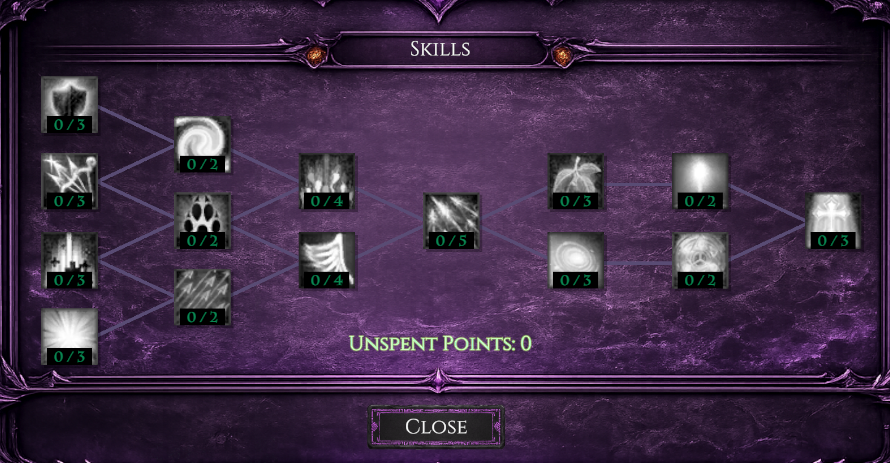
Skills: a branching tree
Spend Skill Points earned on maps to develop passive effects. Starting skills need no predecessor; later skills require the preceding skill in their branch.
Each skill has its own maximum level, ranging from 1 to 5. Some skills have only one level, while others can reach level 3 or 5. Its description explains the conditions for its battle effect, the current benefits and, where further upgrades are available, the next level's benefits, cost and prerequisites.
Spells: unlock, then upgrade
Failon starts without spells. The first Spell Point for a particular spell automatically unlocks it. Further points for that spell can be spent, together with Gold, on upgrades in the spellbook.
Each level improves the spell. The spellbook shows its description and upgrade information; check it outside battle to see the points available for that spell.
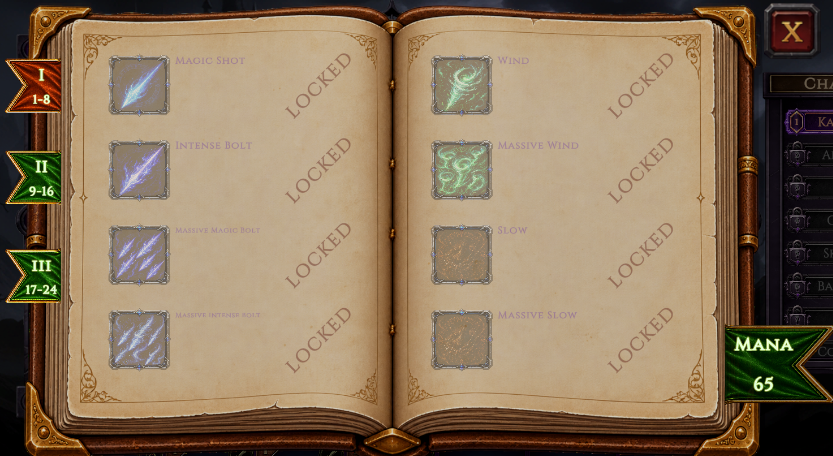
Spell categories & level caps
- OffenseLevel 10
- Simple roundsLevel 5
- Simple tacticalLevel 8
- Hard tacticalLevel 3
- Post tacticLevel 5
Use each spell's description to understand its effect. Spell Points and Gold develop your spellbook; mana pays for casting spells during battle.
08 / Combat
Turn-based battles
Battles take place on a grid using the stacks in your active army. Your formation determines the starting rows: slots 1–4 form the back line, while slots 5–7 form the front line, closer to the enemy.
- 5
- 6
- 7
- 1
- 2
- 3
- 4
The turn-priority list orders units by their movement attribute. On a unit's turn, move across the grid or attack: melee units fight up close, while ranged units can shoot from a distance.
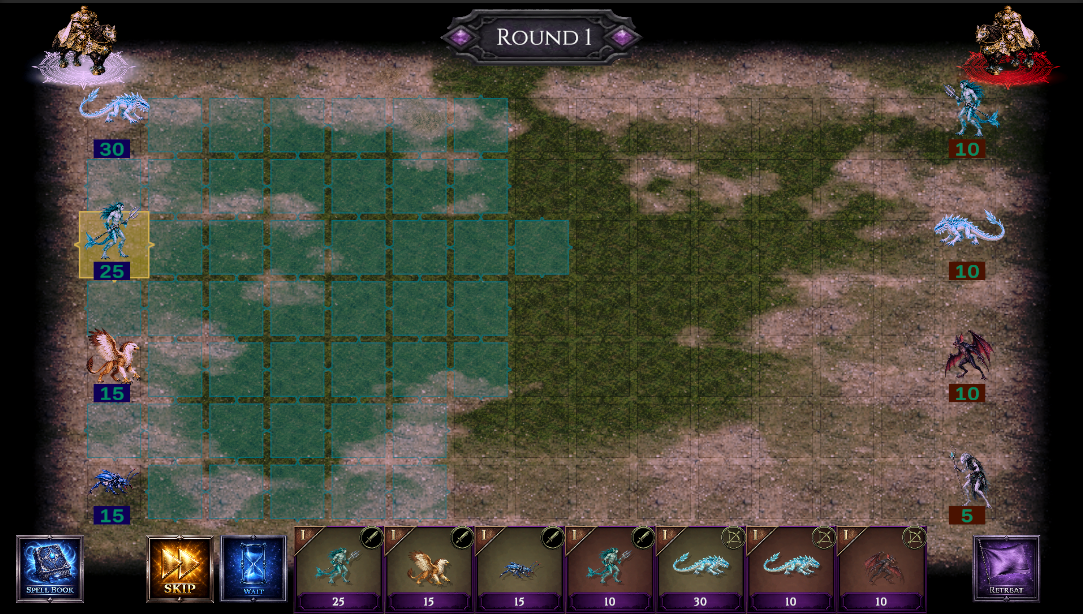
- Wait
- Moves the unit's turn to the end of the current round.
- Skip
- Passes the unit's action for the current round.
- Hero spells
- You may cast one hero spell per round. Each cast costs mana; the spellbook shows the cost and remaining mana. Enemy heroes also have a mana pool.
- Retreat
- Surrenders the battle. Before completing the map objectives, this loses the map and means restarting it. After objectives are complete, the map remains completed, just as with other defeats during extra exploration.
Your preparation comes together here: castle development shapes your available units, formation sets their starting rows, and Failon's attributes, passive skills and spells support the battle.